SellerSprite Logo Amazon Seller Toolbox, Keyword Research, Reverse ASIN, Product Research
 English
Function Manual

Why Doesn’t an ASIN’s Estimated Sales Match Its BSR Ranking?

2025/10/15 Read Count (5,340) Comment Count (0)

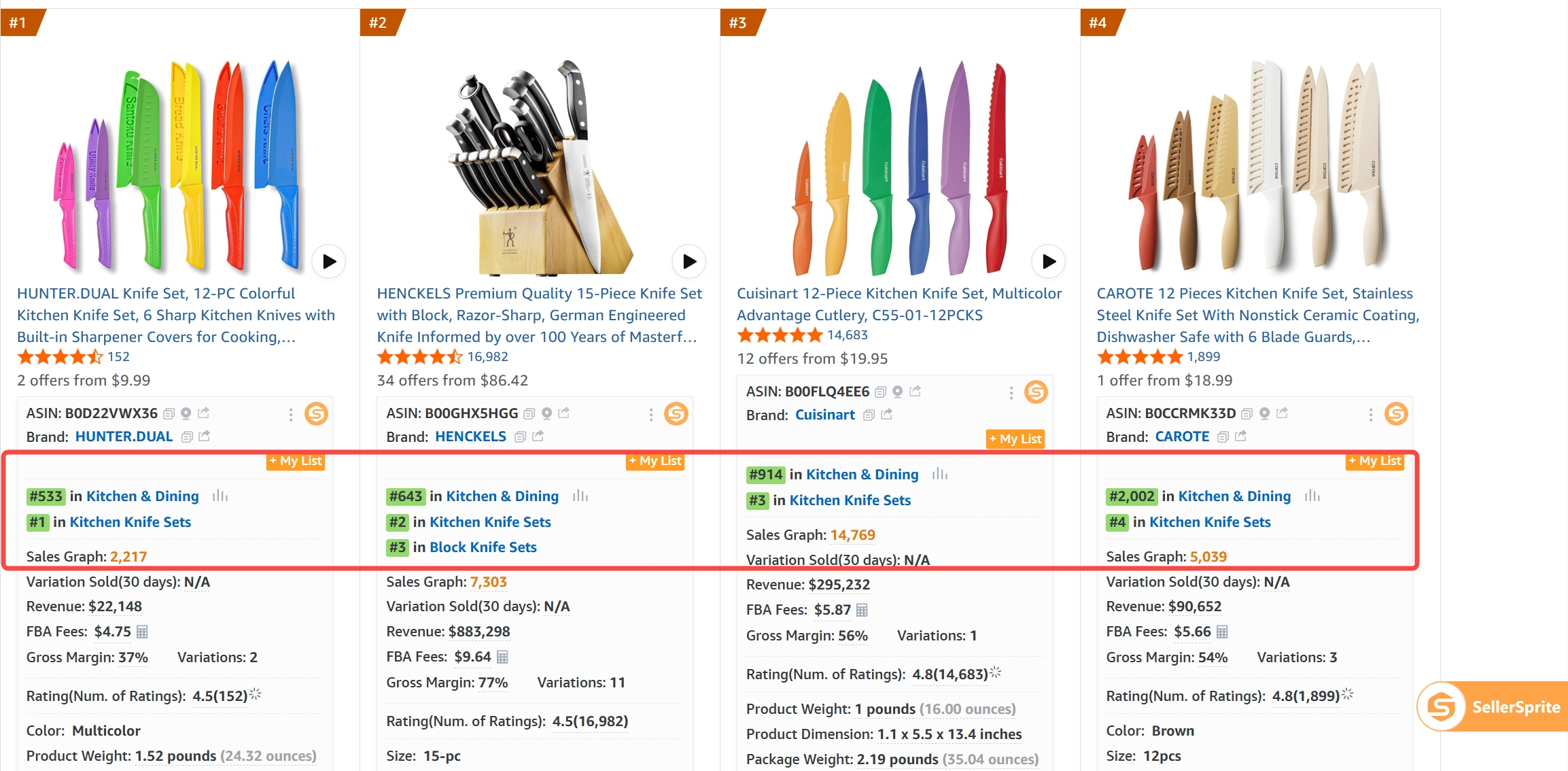
Recently, some users have asked why the 30-day estimated sales under Product Research don’t align with the BSR rankings—for example, why a product ranked #1 in its category has lower estimated sales than products ranked #2, #3, or even #4.
Let’s clarify this with a concrete example.

  • Real-time data scraped from Amazon, such as BSR ranking, price, rating, and review count.
  • Calculated data generated by our algorithm, such as estimated sales over the past 30 days, profit margin, and FBA fees.

Amazon’s BSR updates hourly, and the extension shows a product’s real-time ranking, which reflects its sales performance at a specific moment in time.
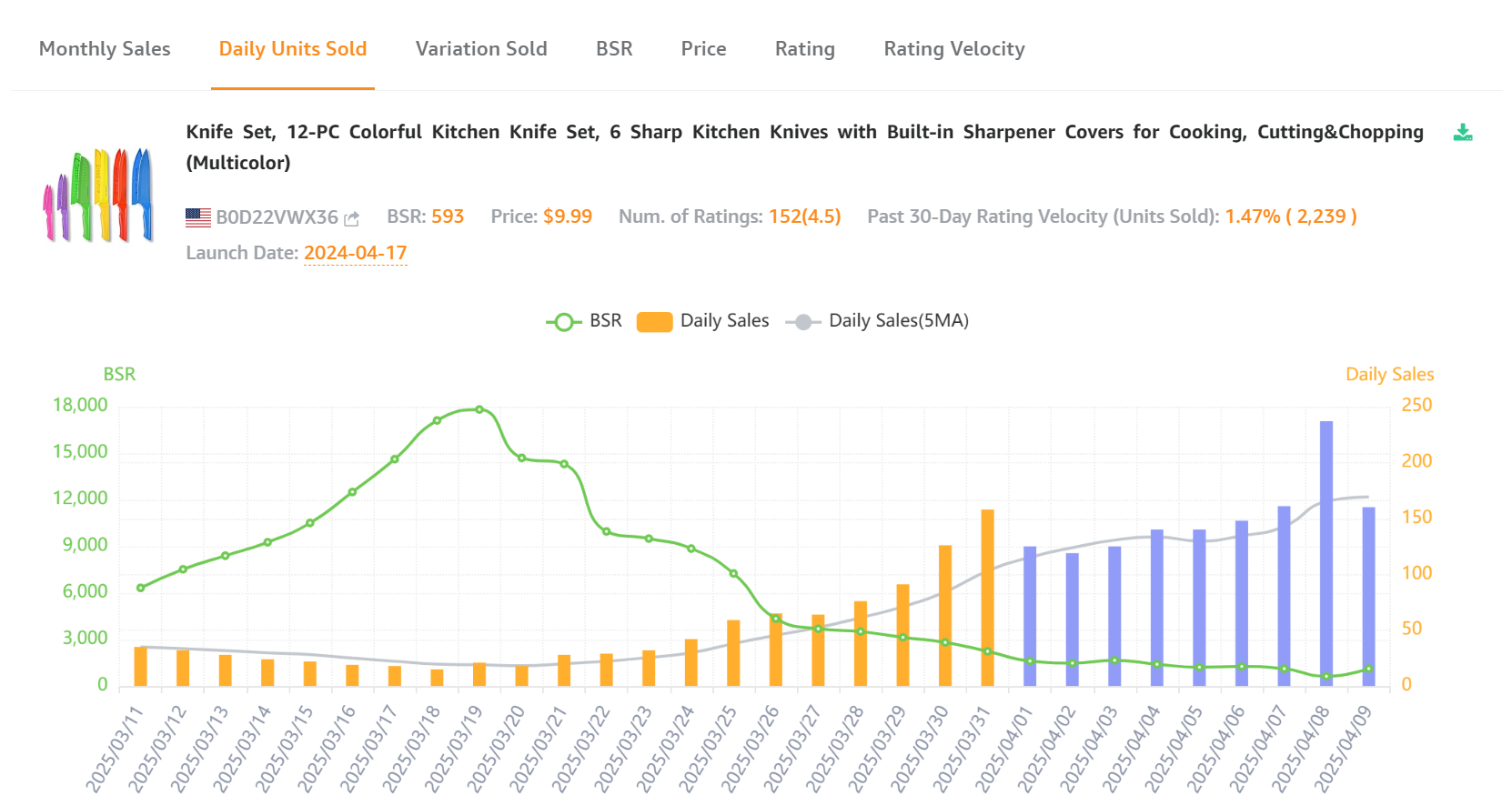
However, the 30-day sales estimate is calculated by taking the daily average BSR for each day, estimating sales per day, and summing the total across 30 days. So, there are 30 BSR averages → 30 corresponding daily sales estimates → added up to get the 30-day total.

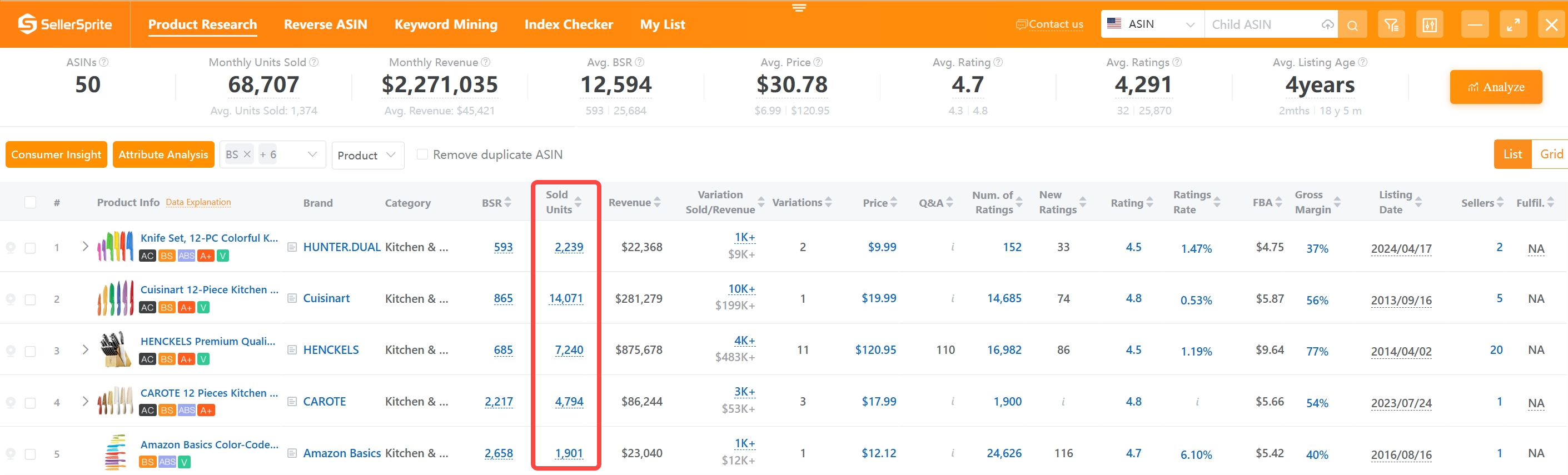
  • BSR #1: 2,239 sales (30 days)
  • BSR #2: 14,071 sales
  • BSR #3: 7,240 sales
  • BSR #4: 4,794 sales
  • BSR #5: 1,901 sales
  • The #2 product has more sales than #1.
  • The #3 product has more sales than #1.
  • The #4 product has more sales than #1.
That’s because the current BSR rank only reflects performance at a specific time, and doesn't represent the product’s average rank over the past 30 days.

Like if you think it helps you!
User Comments
All Comments (0) / My Comments (0)
Newest (0) / Hottest (0)

No comments yet